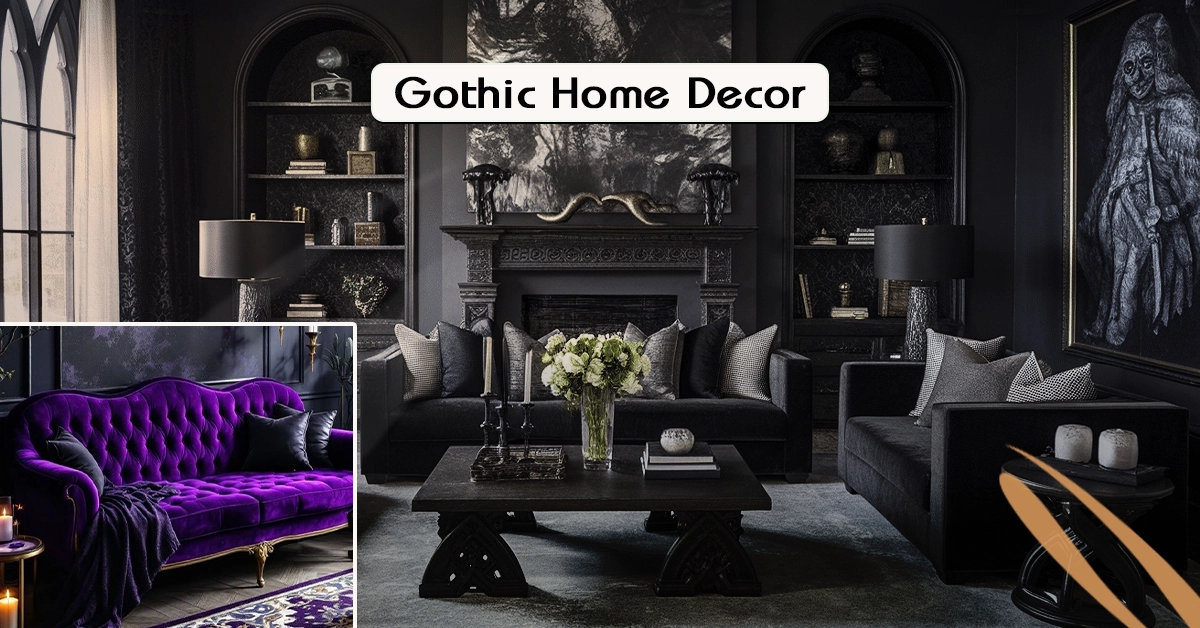
When you think about Gothic decor, you might picture an abandoned castle or a vampiric dwelling with skulls and bats. In reality, the Gothic decor has more depth and diversity. It is elegant with a theatrical touch.
In this guide, we dive into the enchanting beauty of Gothic home decor. With the characteristics and styling tips, make your house a place filled with mystery, drama, and timeless grace.
TL;DR
- Gothic home decor is deeply rooted in historical design, but has transformed into modern styles that balance drama with comfort.
- Core elements of this style are dark color palettes, rich textures, moody lighting, and heavy furniture.
- This style can be adapted for every room, including your kitchen, living room, bedroom, and at-home workspace.
- Different modern subcultures like celestial, occult, romantic, and whimsical goth allow you to choose the style that goes with your personality.
- Successful goth styling is all about the balance of vintage and modern elements.
What Is Gothic Home Decor?
Gothic decor is an architectural approach that is inspired by medieval cathedral architecture. It features bold and dramatic features like high ceilings and pointed arches.

It focuses on rich and dark colors that are illuminated by the natural light coming through stained window glass.
Gothic design showcased the strength of Christianity that had taken over Europe in the 12th century. This style is still popular today in modern interiors due to its sophistication.
In short, the Gothic interior design is expressive, bold, and deeply atmospheric, ideal for those who like character-driven interiors.
A Brief History
Three phases define the Gothic architectural style.
- Early Gothic (1140-1250)
This era saw the creation of ribbed vaults and pointed arches. During this time, the first Gothic building was constructed, which is the Abbey of Saint Denis in Paris. This is why this era is also called French Gothic.
- High Gothic (1250-1350)
Gothic buildings got taller and larger during this time. Extremely large buildings with thin walls, stained glass, and rose windows were constructed, which produced beautiful light patterns.
- Late Gothic (1350-1500)
During this period, more magnificent buildings were constructed with elaborate stonework windows, carving, and symbolism. These structures were also adorned by lavish ornamentation.
Modern Gothic interiors represent late Gothic architecture with lavish ornamentation, rich patterns, and intricate decor items.
Features of Gothic Home Interiors
The main features of the Gothic decor aesthetic are the following.
Gothic Architectural Features
These architectural features create the perfect Gothic houses.
- Pointed Arches: Pointed arches put less pressure on their supports than semicircular arches. These were mostly used in Victorian Gothic decor to point towards God and heaven.
- Vaulted High Ceilings: High ceilings with ribbed or vaulted structures make a Gothic-inspired house design more magnificent.
- Large Windows with Stained Glass: Large windows with stained glass not only provide ample natural light but also create a beautiful play of shadow and light.
Dark Color Palettes
For Gothic-looking homes, deep and rich colors in darker tones are suitable. Rich purples, reds, midnight blues, and emerald greens are combined with neutral backdrops of black, charcoal, and deep gray.
Interiors also feature metallic shades like gold, silver, and bronze to enhance their dramatic effect.
Heavy Furniture and Materials
Bulky furniture in dark colors and rich finishing materials is used in Gothic decor.
The elements include
- Dark hardwood flooring, like oak, walnut, and mahogany
- Intricate wood paneling
- Carved storage cabinets
- Marble or granite stone work, like flooring, kitchen countertops, gargoyles, and sculptures
Rich Patterns and Textiles
Rich and luxurious fabrics like velvet, satin, silk, and brocade are used for curtains, carpets, rugs, wall tapestries, and furniture upholstery.
These fabrics also feature graceful patterns such as floral motifs, trefoil (three-leaf) patterns, tracery patterns, and quatrefoils (four-leaf) patterns.
Moody Lighting
Deep shadows in wall and ceiling niches, as well as brightly-lit spaces, create the perfect balance of dramatic Gothic lighting.
This moody lighting enhances rich textures, colors, and patterns used in the interiors. Gothic aesthetic also looks elegant with warm lights like warm white or yellow.
Room-by-Room Gothic Decor Ideas
The Gothic aesthetic is often considered dark and moody. However, it does not have to be dull.
Gothic Living Room Decor
A Gothic living room should have the perfect blend of drama and an inviting warmth. Use statement Gothic furniture, like tufted sofas, dark wood cabinets, and carved tables.
Add throw pillows, rugs, and heavy curtains. To add more personality, use accessories like antique clocks, ornate mirrors, framed artwork, and sculptures. Balance dark tones with warm lighting to ensure a comfortable environment.
Gothic Bedroom Decor
A Gothic-style bedroom focuses on atmosphere and intimacy. You can use a statement bed frame, either metal or wood, as a centerpiece. Layered bedding in velvet or satin, and accent with deep shades from the Gothic color palette.
Candles, dim lamps, and textured wall finishes help create a calm environment that is both dramatic and restful.
Gothic Kitchen Decor
The Gothic kitchen is adorned with metal finishes, dark wood, and a pendant light hanging above the Victorian-style dining area.
Use steel countertops and table tops, along with glass and steel doors on appliances, to add a touch of shine to the otherwise dark kitchen and dining room.
Gothic At-Home Workspace
It is possible to achieve a Gothic workspace at home without adding curved tables, bookstands, and chairs.
However, to achieve the elegant and mysterious atmosphere, add orante tabletop decorations, lamp stands, drapes, and rugs.
Gothic Wall Decor Ideas
Walls play a major role in establishing the Gothic character. Homeowners can decorate their walls with ornate mirrors, tapestries, or dark wallpaper, and framed art with historical or architectural themes.
You can also go for textured paint or dedicate an entire wall for art (gallery wall) to transform your place into a Gothic aesthetic.
Gothic Furniture and Accessories
A Gothic interior is not about filling your space with different items. The furniture and accessories should be chosen intentionally. We are talking about curved silhouettes, carved detailing, and antique-inspired finishes.
Accessories complement the furniture. Use decorative trays, candle holders, sculptural accents, and vintage-inspired decor items. Always choose a few high-impact pieces instead of cluttering your space with random items.
Gothic-Inspired Decor Styles
There are several goth subcultures, each with its unique charm. It means that there is so much to take inspiration from when it comes to decorating your house in a Gothic aesthetic.
Below are some amazing styles that you can incorporate into your interior.
Whimsigoth Gothic
This beautiful subculture merges the magical allure and mystery of traditional Goth with the beauty of fantasy, folklore, and fairytales.
Celestial Gothic
It is one of the key themes of Gothic decor styles. It draws inspiration from cosmos such as stars, the moon, constellations, and deep midnight blues.
Occult Gothic
This theme is heavily inspired by ritual and is deeply atmospheric. It focuses on symbolism and mystical elements, like tarot, Ouija boards, alchemy symbols, candles, and antique objects.
Romantic Gothic
Romantic Gothic style balances the drama with intimacy and warmth. It emphasizes emotions and softness through candlelight, floral motifs, lace, and antique details.
Gothic Home Styling Tips
Style your house in a way that blends mystery with comfort.
- Use dark shades selectively to avoid visual heaviness.
- Add soft textures to increase comfort.
- Mix vintage elements with modern furniture.
- Focus on proper lighting to create warmth.
- Place accessories carefully to avoid a cluttered look.
Gothic interiors feel elegant, expressive, and surprisingly cozy when done right.
Conclusion
Gothic home decor is a timeless style that blends dark elegance, drama, and warmth. Whether you are inspired by medieval Goth, Victorian style, or modern interpretations, showing your personality through this interior style is an amazing idea.
Read more about how to transform your space on Home Improvement Advise.
FAQs
How is Gothic Decor different from Dark Home Decor?
Dark home decor mainly focuses on deep color schemes. On the contrary, Gothic home decor uses specific historical, architectural, and thematic elements inspired by Gothic and Victorian aesthetics.
Is Modern Gothic Decor suitable for Small Apartments?
Yes, modern Gothic home decor is superb for small apartments, particularly when combined with minimalist layouts, lighter textures, and selective use of darker shades.
What Shades are included in a Gothic Color Palette?
The classic Gothic color palette includes black, deep red, dark purples, navy, emerald green, charcoal, and plum.
Can I mix Gothic Decor with other Interior Styles?
Yes, Gothic decor goes well with vintage, industrial, and even minimalist interiors when you balance the visual impact through color and texture.