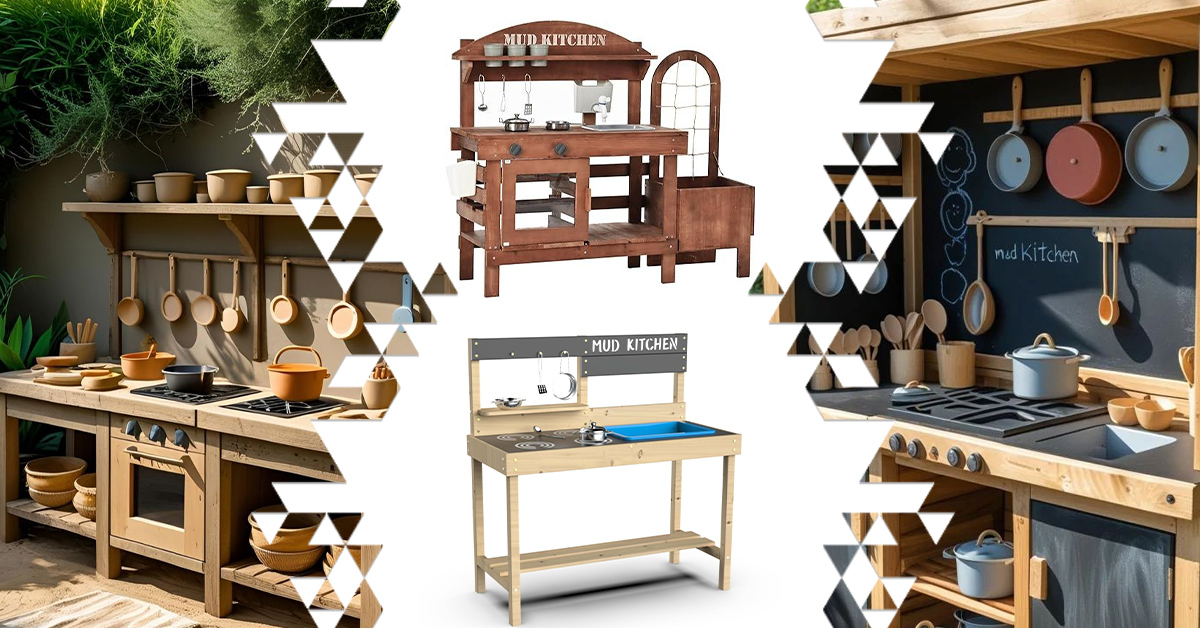
Seeing kids having fun outdoors, while baking mud cakes and getting messy, is magical. Mud kitchens are perfect to ignite this creativity in your little ones. In fact, these kitchens are becoming a trend nowadays.
Kids develop strong motor skills when they are making, mixing, and stirring their “recipes.” All in all, having a mud kitchen in your backyard is essential for enjoyment and teaching kids some important skills.
In this blog, we will cover everything about the mud kitchen: what it is, how it is beneficial for your little ones, safety tips, and play ideas. Moreover, you will also explore DIY mud kitchen ideas and rustic design to capture the beauty of nature fully.
30-Second Summary
Having a mud kitchen is an excellent way for children to learn and thrive in their creative world. In this blog, learn what a mud kitchen is and its benefits for your little ones.
Explore mud kitchen ideas, safety tips, maintenance routine, and play tips for parents, DIY methods, and how to create a space suitable for different age groups.
What is a Mud Kitchen?
Children have been playing with mud for centuries. However, the term “mud kitchen” was popularized in 2012 after Jan White and Liz Edwards released the “Making a Mud Kitchen” for International Mud Day.

It is basically an outdoor play area where children can “cook” using natural materials, such as soil, leaves, water, and stones etc.
It is designed like a mini kitchen and has a sink or a basin, a work surface, some storage, and kitchen utensils.
Types of Mud Kitchen for Kids
A mud kitchen does not have to be complicated. Even a simple table with a few utensils and a basin can become your kid’s favorite.
Portable tub kitchens: It is easy to move from one place to another, and ideal for balconies or small gardens.
Pallet or crate kitchens: It involves rustic and budget-friendly designs using reclaimed wood.
Permanent outdoor setups: It has a sturdier build and includes a counter, shelving, and even plumbing for water play.
Benefits of Mud Kitchens for Kids
A children’s mud kitchen offers numerous benefits.
Builds Creativity: The loose parts, like pinecones, dirt, water, spoons, and petals, can be transformed in multiple ways, boosting a child’s imagination and creativity.
Sensory Experience: Pouring water, mixing mud, crushing leaves, and other activities serve as varied tactile input. It helps kids learn how to respond to the world around them.
Strong Motor Skills: A mud kitchen is a great workout for motor skills. Carrying water, jumping on tree stumps, and stirring the pots builds strength and coordination.
Stress Reliever: It is an excellent way to spend time outdoors and results in better attention and reduces everyday stress for children.
Healthy Microbes: Regular contact with “good soil”, plants, and outdoor microbes supports a healthy microbiome. It may even reduce the risk of allergies.
Small Space: Kids can play in the mud kitchen all year round, and it is easily adaptable to courtyards and balconies.
Nature Connection: A mud kitchen provides a way for your kids to connect with nature, whether through making “mud potions” or “petal stew.”
Mud Kitchen Safety Tips
Having an outdoor kitchen is exciting, but safety always comes first. If you have outdoor mud kitchen plans, keep the following safety tips in mind.
Age-appropriate supervision: Toddlers require proper supervision. The older kids can play independently.
Choose safe materials: Let kids play with smooth and untreated wood and avoid giving them any sharp-edged tools.
Water safety: Make sure to empty water after your kids play with it to avoid standing water.
Hygiene matters: Teach kids to wash their hands before and after playing. Keep a hand sanitizer or hand wash station near the kitchen area.
Weather precautions: The kitchen should be in a shaded spot. Remind your kids to wear hats on sunny days.
Insect prevention: Keep basins covered overnight to avoid any insect contamination.
Regular cleaning: Rinse the tools daily. Deep clean them every week with a mild soap.
Materials and Tools: What to Buy vs. What to Reuse
You can start with these tools and then add more as you go.
Buy New (if needed)
- Stainless steel bowls, muffin trays, and colanders
- Wooden spoons and measuring cups
- Shallow basins and plastic tubs
Reuse and Recycle
- Old crates, pallets, and an unused side table.
- Thrifted pans, pots, and baking trays
- Mason jars and watering cans
Other Material
Natural Ingredients: Soil, sand, pebbles, flower petals, non-toxic berries, herbs, leaves, and seed pods.
Storage Essentials: Bins, baskets, a low shelf, and stackable crates.
Creative DIY Mud Kitchen Ideas and Outdoor Plans
Let’s take a look at DIY mud kitchen ideas.
Balcony Tub Kitchen
If you have a small space, take two stackable tubs and place them on a sturdy table to create an instant mud kitchen. Add a spoon, a water jug, and a bowl to complete it.
Rustic Pallet Mud Kitchen
Use reclaimed wood and sand it down. Attach a metal bowl to it as a sink. Use hooks for utensils and add a shelf to keep ingredients. This mud kitchen is rustic, eco-friendly, and extremely affordable.
Under $100 DIY Build
You need 2 pallets, 1 stainless bowl, screws, sandpaper, and outdoor paint.
- Cut the pallets according to a child-height counter (50 to 60 cm).
- Secure a horizontal surface, and cut a hole for the sink bowl.
- Add legs, screw hooks for utensils, and attach a lower shelf.
- Paint with child-safe outdoor sealant.
Permanent Outdoor Kitchen
If you have a bigger garden, you can build a playhouse-style mud kitchen. You can add a roof for shade, a chalkboard for the menu, and a hose hookup for running water.
Rustic Mud Kitchen Ideas and Styling
A rustic mud kitchen creates a warm and vintage-inspired outdoor play area. It is all about earthy shades, natural materials, and cozy accents.
To style a rustic mud kitchen, consider the following tips.
Reclaimed Wood Build: Utilize old pallets or salvaged wood to build a counter and shelves. It will instantly give your mud kitchen a rustic look.
Vintage Sinks and Bowls: Use enamel bowls and an old metal sink for an authentic look. These are also easy to clean and durable.
Rustic Accents: Add hooks to hang ladles, pans, and wooden spoons. Have a chalkboard on which your kids can write their daily specials.
Herb Corner: Put small pots of basil, rosemary, and mint leaves. Your kids can add them to their mud recipes to make the playtime enjoyable.
Stone or Brick Base: You can use stones or bricks to create a sturdy base. It gives a cottage-like vibe and blends beautifully with the garden.
Natural Color Palette: Choose earthy shades like green, off-white, and brown. Paint the outdoor with safe and non-toxic paint to keep it beautiful yet child-friendly.
Weatherproofing: Seal all the wooden parts with eco-friendly and non-toxic sealant to protect them against rain, mud, and harsh weather conditions.
Practical Setup and Play Tips for Parents
- The best placement of the kitchen is near soil or grass, not the concrete.
- Create a “mud station,” but keep your old clothes and aprons nearby.
- Lay a tarp under the play area for quick cleanup.
- Introduce play gradually, first by water and soil, and later by mud.
- You can provide play prompts to your kids, such as “bake mud pies” using the muffin trays, or create a “potion” using flower petals and water.
Seasonal Use and Maintenance
To keep your mud kitchen functional all year, you need a little planning. Follow the seasonal tips below to make your setup last longer.
Summer: Place the mud kitchen under a shaded area to protect kids from direct sunlight. Keep water basins and tubs filled with cold water for a refreshing outdoor play.
Rainy Season: To protect the setup from moisture, use a waterproof cover when it is not in use. Keep all the steel accessories, like bowls and spoons, indoors to prevent mold buildup and rust.
Winter: If outdoor play is not possible, bring small utensils inside and let your children play with sand, rice, or flour in a large tub. It will avoid the mess of wet soil.
Routine Maintenance
Daily: Empty all the tubs and bowls and rinse tools. Discard any leftover mud or plant matter to prevent bacterial growth.
Weekly: Wash all utensils and surfaces with mild soap and water for hygiene.
Monthly: Check wooden parts for any splinters, loose nails, or cracks. Reapply non-toxic sealant if needed to keep the wood weather-proof and child-safe.
Making Mud Kitchen Fit Ages and Stages
Mud kitchens are ideal for toddlers, preschoolers, and early elementary school children. Changing the space slightly makes it the right fit for every age.
Toddlers (1 to 3 years)
Their Play: They mostly work on pouring, scooping, and dumping the mud.
Set up: Use a low and sturdy surface with shallow tubs and water.
Tools: Let them play with large cups, bowls, ladles, funnels, and colanders.
Prompts: You can enhance their cognitive growth through prompts such as “wash the rocks” or “mix the soup.”
Safety: Stay close to your kids, add shallow water to the tubs, and avoid giving them any small and hard items to prevent choking hazards.
Preschoolers (3 to 5 years)
Their Play: They get good at pretend play, sharing, and taking turns at this age.
Set up: Place a small chalkboard, hooks to hang tools, and an elbow-height counter.
Tools: Let them play with measuring cups and spoons, muffin tin, scales and funnels, a small mortar and pestle, and recycled containers.
Prompts: You can enhance their playtime with prompts like “mud bakery or cafe”, “food delivery service,” or “potion lab.”
Early Elementary Kids (6 to 8+)
Their Play: At this age, they get better at reading, writing, early science, and engineering.
Set up: Add clipboards, balance scales, and builable items, such as tubes and dams, in the kitchen.
Tools: Give them a sieve, graduated jugs, a tape measure, a rubber mallet, and a simple pump sprayer.
Prompts: Tell them to write a new menu daily, see how fast sand vs salt dissolves in water, and measure ingredients in recipes.
The Bottom Line
Apart from an outdoor playstation, a mud kitchen is a lab where children experiment, create, and connect with nature. It can become the center of your backyard with the right safety measures and a creative setup.
Whether you choose to create a rustic-inspired kitchen or a minimalist one with a couple of tubs, all mud kitchen ideas ensure safe and educational playtime.
Ready to discover more ideas for your home? Explore Home Improvement Advise to learn how to transform your house into a cozy and beautiful space.
FAQs
What is a Mud Kitchen?
It is an outdoor play area that has kitchen utensils and natural ingredients like sand, mud, water, leaves, flower petals, and herbs. It supports sensory and imaginative play for children.
What can I put in the Mud Kitchen?
You can put utensils, like bowls, cups, wooden spoons, funnels, shallow tubs, and nature bits, like berries, lemons, leaves, flowers, soil, and water.
How much does a DIY Mud Kitchen Cost?
A DIY mud kitchen can cost you around $50. You can use salvaged wood, second-hand utensils, and thrifted tools to remain budget-friendly.
What is the Best Age for a Mud Kitchen?
A mud kitchen is excellent for toddlers to early elementary school kids. The age group is 1 to 8 years and above.
What is the Safest Dirt for a Mud Kitchen?
If soil from your backyard is not suitable, the safest options are loam and clay, which you can get from your local landscape supplier.