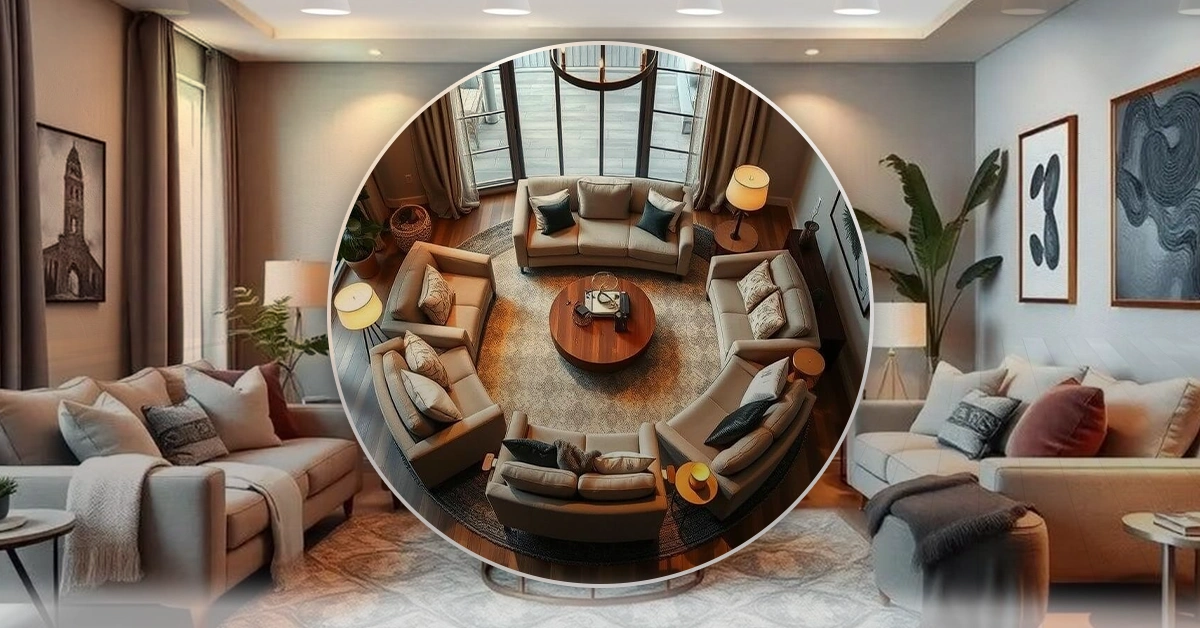
The living room is often the heart of the house. We relax, spend time with family, watch movies, and entertain our guests here. Therefore, understanding its size and layout is necessary to create a functional and comfortable space.
The average living room size depends on the type of home, its layout, and the lifestyle needs of the homeowners. Understanding the dimensions helps in selecting the ideal furniture, seating plan, and maintaining a good flow throughout the space.
In this guide, we explain typical living room dimensions, how size changes across different home types, and how to plan your layout for a balanced and inviting space.
30-Second Summary
The living room, being the focal point of your house, needs a proper layout for the right furniture and maximum comfort. This guide covers the average living room size for small, medium, and large houses.
Moreover, find out living room sizes based on home types, the correct furniture spacing, living room seating arrangement, and some pitfalls you should avoid.
What are Standard Living Room Dimensions
If you are building or redesigning your home, you must be wondering about the typical living room layout. The basic rule of thumb is giving your living room 11% of your overall square footage for small and medium houses. For large homes, it is 7.5%.

The average size of an American living room is around 12 by 18 feet (around 216 square feet), and it can easily accommodate 6 to 10 people.
Small Living Room Dimensions
The average size of a small living room in America is 10 x 13 feet (130 square feet). This size of living room can accommodate two to three people, sometimes four, depending on the room’s seating arrangement and configuration.
Medium Living Room Dimensions
A medium-sized living room in the US is 12 x 18 feet (around 216 square feet). This room has enough space to house at least six people. A medium-sized living room is ideal for a home that is around 1500 to 2000 square feet.
Large Living Room Dimensions
Any home that is over 2,500 square feet can fit a large living room. The average size of this living room is around 15 x 20 feet (300 square feet). Some large houses even have living rooms that are 20 x 20 feet ( which is 400 square feet).
Living Room Size by House Type
Different house types need different sizes of living rooms.
Standard Apartment Living Room
In a standard apartment, space is often limited. The average living room size usually ranges between 16 and 20 square meters, which is around 170 to 215 square feet.
This size accommodates
- A coffee table
- A two or three-seater sofa
- A media unit for a TV
- One or two extra chairs
However, you can still create a comfortable and functional space with these dimensions. Make sure to prioritize clear pathways and avoid putting large furniture in the room.
Family Home Living Room
For a family home, the layout of the living room should be generous. The ideal size is around 25 to 30 square meters or 270 to 320 square feet.
This size allows for
- A large coffee table
- A full-sized sofa
- Additional armchairs or lounge chairs
- Media setup with a cabinet or bookshelf
- A cozy reading nook or a play area for children
This size is perfect for families with children, couples, or any individual who wants comfort with flexibility.
Open Concept Living Room Size
Modern homes often have open-plan layouts that combine the living room and dining area, and sometimes the kitchen as well. For this modern living room layout, the average size of a living room is around 35 to 50 square meters or 375 to 540 square feet.
Such a layout includes
- A large dining table with six or more chairs
- A spacious seating area
- Zones for indoor plants or a workspace
- Clear paths for movement around the zones
This type of layout needs careful furniture placement and lighting to create a functional space without making it overcrowded.
Factors Influencing the Ideal Size of a Living Room
- Furniture Layout: For a person who lives alone or as a couple, the requirements for the living room will differ from those who live with several family members.
- Building Type: The type, number, and arrangement of furniture influence how large a living room should be. Minimalist setups need less space while lounge-style arrangements need more.
- Room Function: The more functional you want your living room to be, the more space you will need. Think: Is it only for accommodating guests, or do you need a workspace and a children’s play area in it as well?
- Household Size: In urban apartments, most living rooms tend to be on a smaller side, while detached houses or country homes allow for a more generous living room space.
Furniture Space Planning for Living Rooms
Comfort directly depends on circulation. Even a large living room can feel cramped if traffic paths are blocked or there is not enough space between furniture pieces.
The following interior design space guidelines can help you plan effectively.
- Leave around 40 to 50 cm or 16 to 20 inches of space between the sofa and the table for easy reach and legroom.
- The clear walkway space should be 80 to 100 cm or 32 to 40 inches.
- The seating distance from the TV should be 2 to 3 times the screen diagonal.
- Around a dining table, keep a minimum of 75 cm or 30 inches of space on all sides so people can move around or pull out chairs easily.
Planning Furniture for the Right Proportions
Selecting furniture items that suit the size of your living room is necessary, and this is called proportional furniture sizing.
- Small Rooms: To avoid a cramped feel, choose compact sofas, open-leg designs, wall-mounted TVs, floating shelves, and nesting tables.
- Medium-sized Rooms: In these rooms, sectionals work the best. Add one or two chairs and a rug to define the space.
- Large Rooms: Create more than one seating zone, such as one for a TV lounge area and one for conversation.
If you are redesigning your house or buying a new one, proper home square footage planning is essential, particularly if you want to have a spacious open-concept layout.
Living Room Seating Arrangement
Whether you have a small living room or a large one, the goal is to create a space that is balanced, comfortable, and allows movement.
Small Living Room
The ideal furniture for small living rooms is light and flexible.
- Choose a compact sofa or a loveseat to avoid a cramped space.
- You can add one accent chair to create seating for additional people.
- Wall-mounted shelves are extremely effective in maximizing small living room space, as the clutter is stored on these shelves, not on the floor.
Medium Living Room
Medium-sized living rooms have more room to create a functional space.
- Put a coffee table with built-in storage to reduce clutter and keep essentials within your reach.
- Add one or two accent chairs along with a side table for easy conversations.
- A sectional sofa works best for ample seating space.
Large Living Room
Large living rooms support multiple seating zones for maximum comfort and usability.
- Use two sofas that face each other for a balanced and inviting conversation zone.
- Use two rugs to define separate functional areas, such as one for lounging and one for reading or entertainment.
- Add several accent chairs to expand seating without overwhelming the space.
Using the right seating arrangement helps you visualize living room floor plan ideas and supports better flow.
Common Mistakes to Avoid
Here are some common mistakes every homeowner should avoid that can make even large living rooms cramped and impractical.
- Selecting oversized furniture for a small space
- Not considering the need for movement zones
- Putting the TV too far or too close to the seating
- Stuffing your living room with a lot of side tables or decorative elements
- Using lightning that is too dim for the room
- Ignoring the width and swing of doors and windows
Wrapping It Up
There is no one-size-fits-all for living room size. The right one feels comfortable, functional, and accommodates your daily life.
By understanding the average living room size and how layout affects the flow, you can choose furniture and decor that support comfort instead of making it feel cramped.
Always take measurements before purchasing furniture for your living room and think about functionality and movement.
To learn more about home decor, feel free to explore Home Improvement Advise.
FAQs
How can I Maximize Small Living Room Space without Compromising Style?
You can use multifunctional furniture, light colors, a proper lighting system, floating shelves, and mirrors. These choices keep the room functional while also maintaining an airy and open feel.
How do I Design a Modern Living Room Layout in an Open Concept Home?
Define zones using lighting, furniture, and rugs. Your seating should face a focal point. Ensure that the movement flows clearly from one area to another.
What is the Average Living Room Size for a Small House?
A comfortable living room size in a small home is around 120 to 180 square feet. You can maximize comfort by using compact furniture and keeping walkways clear.