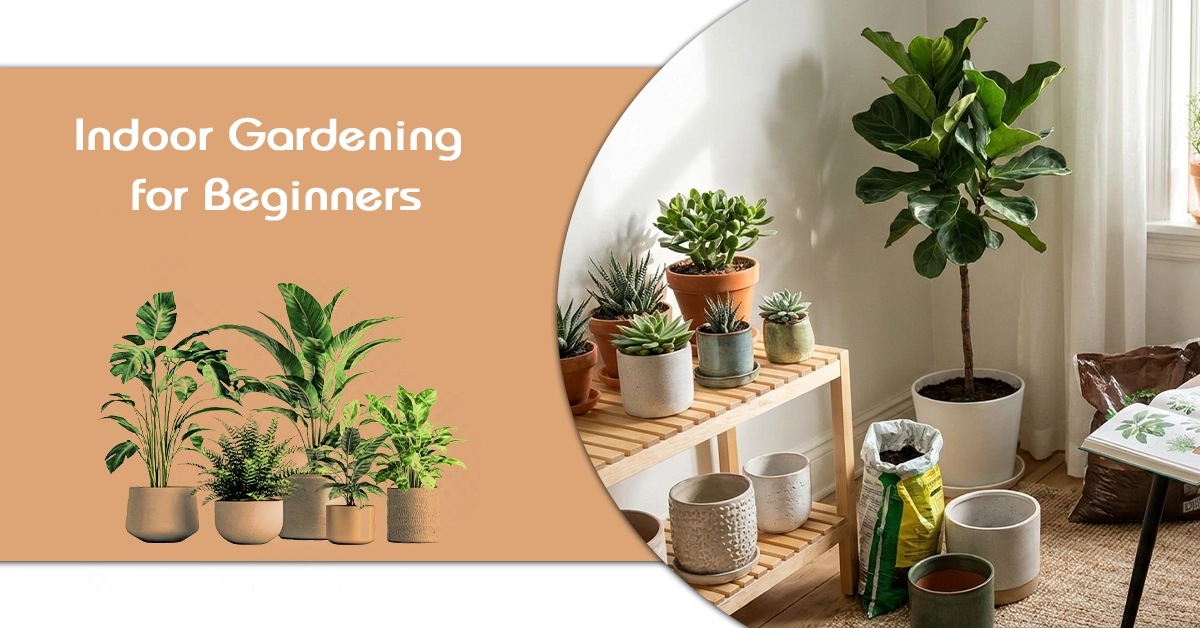
Indoor gardening is a superb way to bring nature indoors. Whether you love gardening and want to start small or are inspired by homes with indoor gardens on Instagram, this guide is here to help you.
We will cover indoor gardening for beginners, from its benefits and understanding different requirements to how to start an indoor garden, along with some useful tips.
30-Second Summary
- Indoor gardening lets you grow herbs, vegetables, and greenery the entire year with controlled light, water, and soil.
- Start small with low-maintenance plants and proper drainage for successful yields.
- The perfect balance of light, humidity, and water is the major factor behind successful plant growth.
- You can grow an inexpensive indoor garden using recycled containers and DIY solutions.
What Is Indoor Gardening?

Indoor gardening is exactly what it sounds like: growing vegetables, herbs, and greenery indoors year-round. You see growth regardless of outdoor weather conditions; however, an indoor garden needs controlled water, light, and soil to thrive.
Benefits of Indoor Gardening
There are plenty of benefits to having an indoor garden.
- Indoor plants improve air quality by eliminating toxins and increasing oxygen levels.
- Seeing green plants around you and interacting with them gives you a mental boost, reducing stress and increasing dopamine/serotonin.
- Greenery in houses helps in focus and concentration.
- It also reduces fatigue and headaches and lowers blood pressure.
- Growing your own vegetables and herbs provides fresh and organic food options.
- Green plants in an indoor space increase its aesthetic and ambiance.
Types of Indoor Gardening
There are several ways to start indoor gardening. Here are some popular ones.
- Container Gardening

It involves growing plants in pots, planters, or other containers. It is suitable for both small and large spaces. You can move pots around to optimize light exposure or easily change the layout of your indoor garden.
- Hydroponic Gardening
This gardening technique does not use soil; instead, plants are grown in nutrient-rich water. It is an amazing method to grow plants faster and produce more yields compared to soil-based gardening.
- Vertical Gardening

Vertical gardening involves growing plants upwards. This technique is ideal for climbing plants and trailing flowers. If you have a small space, like a balcony, try vertical gardening for the best results.
- Terrariums
These are miniature gardens housed in glass containers. Terrariums are low-maintenance and self-sustaining. Sealed containers create a tropical and humid environment, perfect for ferns and mosses. The open containers are suitable for succulents and cacti.
Essential Supplies for Indoor Gardening
- Pots and containers with drainage
- LED growlight or full-spectrum bulbs
- A small watering can with a spout, a water mister, and a moisture meter
- Pruning shears
- Organic fertilizer
- Humidifier
- Pest control, like neem oil or yellow sticky traps
- Moss poles, bamboo stakes, or soft plant tape for climbing plants
Understanding Light Requirements
Light is one of the major factors that determines your indoor plants’ growth. It also has a huge impact on your plants’ reproductive phase when they are ready to grow fruits, vegetables, flowers, and seeds.

While natural light is suitable for indoor plants, not every house gets sufficient sunlight. In that case, you can use artificial light, such as fluorescent lights, bulbs, or LEDs.
Most plants fall within the following ranges in terms of their light needs.
- Direct light: Some plants need hours of direct sunlight, even if it is through a window, for growth.
- Indirect light: There are two situations for indirect light. Either your plant is sensitive to direct light and needs indirect light, or you do not have access to direct light, so to compensate for it, you give as much indirect light to your plants as they need to grow.
- Low light: Best for plants that need only a few hours of indirect light each day.
The key is to read your plants. If you notice yellow leaves or burn spots, choose a spot not too close to the window. If they look weirdly long and leggy, give them more light so they do not grow to reach for it.
Choosing the Right Plants for Beginners
Here is a list of different plants beginners can grow indoors.
- Snake Plant
- Aloe Vera
- Pothos
- Rubber Plant
- Spider Plant
- Leafy greens like lettuce, spinach, and kale
- Herbs like rosemary, basil, parsley, and mint
- Peppers
- Cherry tomatoes
- Radishes
- Carrots
- Green onions
Basic Indoor Plant Care
Indoor plant care means proper water, soil, and temperature maintenance to help your plants thrive.
Watering Basics
Overwatering is the primary cause of indoor plant death. To avoid it, you need to water them in moderation. Before discussing that, let’s talk about the signs that tell your plants’ water needs.

- If they are turning yellow, they need less water and more nutrients.
- If they are becoming brown and crunchy, they need more water. Do not overwater; just make sure that the soil is damp.
- If there is no new leaf growth, they need more water.
When it comes to properly watering your plants, notice the soil. If it is wet, do not water it. Moreover, let the water drain; otherwise, it will become stagnant and cause mold. Filling the container with too much water can drown plants, as their roots still need air.
Additionally, research what suits your specific plants. Make sure to incorporate drainage as well, so even if you accidentally overwater, it will save your plants’ lives by draining excess water.
Soil
Soil contains all the essential nutrients, organic matter, air, water, and even living organisms like fungi and bacteria. It is particularly important for indoor plants so they can replenish and grow by drawing on these nutrients.
Make sure to buy an organic potting soil rather than your garden’s soil, as it can bring pests and plant diseases into your home.
Store the unused potting soil in an opaque container and keep it in a dry area. Do not keep it in the area where it can get wet, attract pests, or grow bacteria. Check it every few months to see if it is still fine.
Fertilizing
Fertilizer has all the nutrients that replenish the soil’s original nutrient content. Fertilizers have large concentrations of Nitrogen, Phosphorus, and Potassium (NPK). Different fertilizers come with different NPK ratios to suit different plant varieties.

Make sure to buy organic fertilizer as it improves soil quality over time. Synthetic fertilizers can degrade soil quality in the long run, so it’s best to avoid them.
How to apply fertilizer
- Water your plants before applying fertilizer so they can absorb it better.
- Follow the instructions on the fertilizer sack to determine how often to use it.
- If your packaged fertilizer is not specifically for indoor gardening, use only ¼ to ½ the recommended amount, as you have less soil to fertilize.
Temperature and Humidity
Temperature and humidity both play an important role in your plant’s health. Letting your plants get too hot or too cold can inhibit their growth and photosynthesis.
The ideal temperature for plants is what is ideal for you. If you are comfortable, it is highly likely that your plants are comfortable as well. The “comfortable” range is around 18 to 27°C or 65 to 80°F.
Moreover, plants need humidity because dry air causes them to lose moisture, which they cannot replace solely through their roots. Apart from getting a humidifier, here are some ways to increase humidity levels.
- Group all your plants together so they have a microclimate that increases the humidity level.
- Create a pebble tray by taking a shallow tray, placing pebbles in it, adding a small amount of water, and putting your plant on the pebbles. This method is used for water evaporation and providing humidity to the plants.
- You can also mist the leaves lightly periodically. However, do not soak the leaves to prevent mold and fungus.
How to Get Started: A Step-by-Step Beginner’s Guide

- Pick the right location, preferably one that gets natural light, like a balcony or a windowsill.
- Start with low-maintenance plants, such as snake plant, pothos, mint, or basil.
- Select plant pots with drainage holes to prevent water stagnation.
- Match the plant’s light requirements or use grow lights if needed.
- Water only when the soil feels dry. Do not overwater.
- Keep your plants in a stable environment with ideal temperature and humidity.
- Use mild liquid fertilizer every few weeks during active growth.
- Once you notice sprouting, keep a check on the plant’s health for signs of discoloration or pests.
- Start small with a few plants. Observe their needs and expand as you build more confidence.
Indoor Gardening on a Budget
- Use what you already have: Before buying anything, look around your house. Old cups, cans, mason jars, colanders, and even shoes make quirky plant pots. Always add drainage holes at the bottom to avoid waterlogging.
- Begin with seeds, not plants: Seeds are significantly cheaper than established plants and can produce dozens of plants. Herbs like basil, cilantro, and parsley are affordable and easy to grow indoors.
- Buy from budget-friendly resources: Instead of garden centers, explore Facebook Marketplace, dollar stores, plant swaps, and grocery stores for affordable plants and supplies. Many communities also have free plant exchange programs where gardeners share seeds and cuttings.
- DIY growth lights: Professional grow lights can be expensive, but you can choose an affordable alternative. Standard cool-white fluorescent bulbs or inexpensive LED shop bulbs can support plant growth when natural light is limited. Place these lights 6 to 12 inches above your plants for best results.
Indoor Gardening Tips for Success

- Assess your space and the amount of natural light you get before buying the plant.
- Always use pots or containers with drainage holes.
- Water according to your plant’s needs instead of a fixed schedule.
- As plants grow toward the light source, keep rotating them every few weeks to avoid uneven growth.
- Wipe the leaves gently every few weeks with a damp cloth to get rid of accumulated dust.
- Monitor your plants closely to spot warning signs before they cost your plants their lives.
Wrapping Up
Growing indoor plants is an excellent alternative to outdoor gardening, particularly if you have a small space or during frosty winters. The best part is that you do not need an expensive setup. You can build it using items lying around your house.
Start small and keep adding new varieties to enjoy a serene, green space indoors.
For more gardening-related information, visit Home Improvement Advise.
FAQs
What are the Best Low-maintenance Plants for Apartments with Little Sunlight?
Snake plants, ZZ plants, spider plants, and pothos are among the low-maintenance plants that thrive in low light and irregular watering, making them ideal for dim apartments.
Why are my Indoor Plants turning Yellow even when I water them regularly?
Yellow plants mostly signal overwatering, poor drainage, and nutrient deficiency. Water your plants less frequently, use organic matter, and ensure proper drainage.
How do I Prevent Mold and Fungus in Indoor Plant Soil Naturally?
Ensure proper drainage to avoid waterlogging, do not overwater, and increase air circulation. Moreover, sprinkle cinnamon or neem powder on the soil surface, as they are anti-fungal, anti-bacterial, and pest-repellent.