20-Second Summary
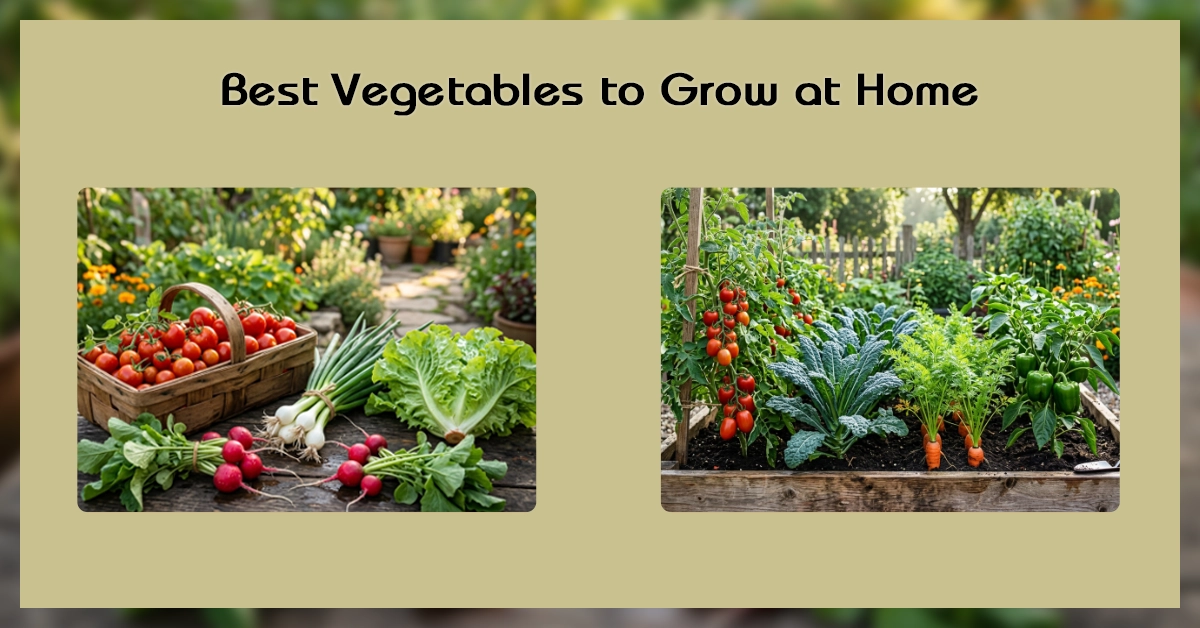
If you want to know about the best vegetables for home gardening, then this comprehensive guide is for you. We will help you to grow your first vegetable garden by covering the easiest vegetables like tomato plants, green beans, lettuce seeds, and leafy greens that thrive in any season.
- You’ll learn easy-to-grow vegetables that are perfect for container gardening and small spaces
- You will also learn proven techniques like companion planting.
- You will discover the plants with us that grow best during early spring, summer heat, and cool season crops to ensure year-round harvests.
Let’s see how you can develop your green thumb with the gardening tips from Home Improvement Advise, becoming a confident home gardener with productive gardens.
Begin with Vegetable Gardening Mistakes
We will begin with the mistakes first, because that is what you must be aware of before starting your vegetable garden.

Most beginners make one critical mistake when starting their vegetable garden: they choose vegetables based on what looks pretty at the garden center rather than choosing what will grow in their space, and then when they do not get results in the next three to four months, they stop thinking they lack a green thumb.
There is no such thing as a green thumb for gardening. You can develop it by learning the required skills over time.
Choose the right vegetables for your situation, and this is what this blog is going to help you with. We will tell you exactly which vegetables are best for home gardening and will thrive in any condition.
Whether you’re working with a sunny spot, partial shade, small spaces, or even a container gardening setup on your apartment balcony. By the end of this guide, you’ll have the knowledge to grow your own food with confidence.
What Makes A Vegetable “Best” For Beginners?
There are three basic criteria that show why certain vegetables are the best vegetables for gardening:

These easy-to-grow vegetables can bear the mistakes that beginners make. These thrive despite beginner mistakes such as overwatering, underwatering, and grouping plants too closely.
- Zucchini thrives even with inconsistent care and in poor soil conditions.
- Green beans keep producing even if you miss a watering.
The best vegetables give quick results. They mature quickly, often within 30 to 60 days, which helps motivate a beginner to continue their gardening efforts.
- Radishes germinate in three days and can mature in 25-30 days.
- Lettuce seeds produce cuttable greens in 30-45 days. You can regrow them without replanting using the cut-and-root method.
Productive vegetable gardens have a high yield relative to the space they occupy.
- Yellow squash, bush beans, and pole beans produce continuously throughout the growing season.
- A single zucchini plant in a 4×4 bed can produce 10-15 pounds of fruit.
The Easiest Vegetables For Complete Beginners
Below, we have the five categories that will give you a high rate of success in vegetable gardening.
Zucchini & Summer Squash: The Prolific Producer
Yellow squash and zucchini are easy vegetables that prove that anyone can have a green thumb. These prolific producers are nearly impossible to kill, and they grow even in poor soil conditions.

- These vegetables can tolerate poor soil conditions, inconsistent watering, and sunlight.
- A single plant produces dozens of fruits over the growing season.
Zucchini Planting Guide
- You should plant zucchini seeds or young plants after the last frost date in your area when the soil temperature reaches 60°F.
- Space them 18-24 inches apart in garden beds or container gardening setups.
- Use at least 12-inch pots.
- You can get successful and massive harvests with consistent watering (1-2 inches per week) and fertile soil enriched with organic matter.
- Expect your first harvest 45-55 days after planting.
- Pick zucchini when they’re 6-8 inches long for the best flavor.
Tomato Plants: The Garden Staple
Tomato plants are the best vegetables for home gardeners. We recommend that every home gardener have at least one tomato plant in their garden. They are the easiest to grow; you just need to ensure you prevent them from diseases if you are in humid climates.

They come in two varieties: determinate (bush) or indeterminate (vining).
- Bush tomatoes stay compact and produce all fruit at once. These are great for container gardening in small spaces.
- Indeterminate varieties have the ability to grow and produce continuously until frost.
Tomatoes Planting Guide

- Avoid seeds. Plant young plants 2-3 weeks after your last frost date.
- Space them 24-36 inches apart.
- Tomato plants need fertile soil, which is rich in organic matter.
- Water them consistently and use cages or a trellis to support them.
- Tomatoes can catch early blight (a fungal disease that is common in humid areas) and blossom-end rot.
- You can prevent blossom-end rot by maintaining soil moisture and keeping a pH balance between 6.0 and 6.8.
- You can also prevent early blight by avoiding overhead watering, removing lower leaves, and spacing plants for air circulation.
- Expect 60-85 days from transplanting to first harvest.
Green Beans: Bush Beans vs Pole Beans
Green beans are really easy vegetables as they grow fast and produce prolifically. These come in two types: bush beans and pole beans.

Bush beans grow 12-24 inches tall, are compact, and produce all fruit in a concentrated period.
- These are perfect for container gardening or small spaces.
- They mature in 50 to 60 days and produce heavily for 3 to 4 weeks.
Pole beans grow 6-8 feet tall and require a trellis or vertical structure.
- They produce more slowly but continuously throughout the growing season.
- They’re more space-efficient if you can use vertical growing.
Green Beans Planting Guide
- Plant bean seeds directly after your last frost when the soil reaches 60°F.
- Space seeds 4 to 6 inches apart for bush beans.
- Space seeds 6 to 8 inches apart for pole beans.
- They need at least 6 to 8 hours of sunlight, well-draining soil, and moderate water.
- Expect harvests 8-10 weeks from planting.
- Bush beans finish in 3-4 weeks.
- Pole beans produce for 8+ weeks.
Beans are pest-resistant and also fix nitrogen in the soil, helping to improve your poor soil while they grow.
Leafy Greens: Lettuce, Swiss Chard & Arugula
If you want fast and continuous harvesting, then leafy greens will be your best pick.

Leafy plants like leaf lettuce, lettuce seeds, and Swiss chard can mature in 30-45 days and can be succession planted every two weeks for continued yearly harvests.
- Cool-season crops like lettuce thrive in early spring and early fall.
- Swiss chard can tolerate hot weather and continues to produce throughout the summer if slightly shaded.
Leafy Greens Planting Guide
- Plant lettuce seeds directly in soil or containers.
- They need cool soil, consistent moisture, and at least 4-6 hours of sunlight.
- Space seedlings 6 to 8 inches apart.
- Use the cut-and-come-again method with lettuce.
- Harvest the outer leaf lettuce rather than harvesting complete plants to keep it producing throughout the season.
- Expect first harvests 30 to 40 days after planting.
Root Vegetables: Carrots & Radishes
Root vegetables are easy to grow, but they will need your patience because, unlike other vegetables, you can only harvest and see them when they are pulled out of the ground.

Radish Planting Guide
- Radishes germinate in three days and mature in 25-30 days
- These are impossible to kill.
- Plant seeds directly; thin seedlings to 2 inches apart.
- Water consistently.
- Plant radish in early spring and early fall for best results.
Carrots Planting Guide
- Carrots can take between 60 and 80 days
- They require fertile soil without rocks and clumps.
- Plant seeds thinly; thin seedlings to 3 inches apart.
- Keep soil consistently moist.
- Carrots grown in a home garden not only taste better, but they are also really productive in small spaces.
- A single 12-inch container can grow a month’s worth of carrots.
When it comes to growing root vegetables, ensure you test the soil and make it fertile, and that there are no trees or other competing plants in the same area.
Best Vegetables For Small Spaces & Container Gardening
If you do not have a backyard garden, that does not mean you cannot grow vegetables. Below we have five vegetables that you can grow in small spaces.
| Vegetable | Harvest Time | Soil Requirement | Sunlight | Watering Requirement | Pot Requirement |
| Sweet Peppers | 60 to 90 days from transplanting until frost | Fertile, well-draining soil rich in organic matter | Full sun, 8 or more hours | Consistent moisture; do not allow soil to dry out | Minimum 5-gallon container per plant |
| Hot Peppers | 60 to 90 days from transplanting until frost | Fertile, well-draining soil rich in organic matter | Full sun, 8 or more hours | Consistent and even watering | Minimum 5-gallon container per plant |
| Cherry Tomatoes | 55 to 65 days from transplanting | Loose, nutrient-rich, well-draining soil | Full sun, minimum 8 hours | Regular and consistent watering | Minimum 5-gallon pot with support |
| Basil | 30 to 45 days from seed, continuous harvest | Well-draining soil with moderate fertility | Full sun to partial sun, 6 to 8 hours | Frequent watering, soil slightly moist | 6 to 8-inch pot with drainage |
| Mint | 30 to 40 days, continuous harvest | Moist, well-draining soil with organic matter | Full sun to partial shade | Regular watering; the soil should not dry | 8 to 10-inch container, grown separately |
| Parsley | 70 to 90 days from seed | Rich, well-draining soil | Full sun to partial shade | Even and consistent moisture | Minimum 8-inch deep pot |
| Cilantro | 40 to 55 days from seed | Light, well-draining soil | Full sun in cool weather, partial shade in heat | Moderate and consistent watering | Minimum 8-inch deep pot |
| Oregano | 45 to 60 days, perennial | Well-draining, slightly lean soil | Full sun | Low to moderate watering | Small to medium pot with drainage |
| Thyme | 60 to 90 days, perennial | Sandy, well-draining soil | Full sun | Light watering, avoid overwatering | Shallow to medium pot with drainage |
| Snow Peas | 60 to 70 days | Well-draining soil with compost | Full sun | Regular watering, evenly moist soil | 10 to 12-inch deep container with trellis |
| Sugar Snap Peas | 60 to 70 days | Fertile, well-draining soil | Full sun | Consistent moisture | 10 to 12-inch deep container with vertical support |
Fast-Growing Vegetables: Harvest In 30-60 Days
If you are a beginner who lacks patience, then you must start with these three fast-growing vegetables first:

Radishes germinate in 3 days and mature in 25-30 days.
Lettuce and leafy greens can be grown continuously for 60 to 90 days by using the cut-and-come-again method.
- When the plant reaches a height of 4 to 6 inches, harvest the outer leaves and leave the center to grow again.
Snap peas, snow peas, and traditional peas grow in cool-season windows. They can mature in 60 to 70 days and can produce heavily for 4-6 weeks.
Best Vegetables For Different Growing Seasons
Below is a short list of vegetables that are best suited for each season, along with their planting time and key conditions for successful harvest.
| Growing Season | Planting Time | Suitable Crops | Key Conditions |
| Early Spring | 2 to 4 weeks before the last frost | Peas, lettuce, spinach, broccoli, cabbage, root vegetables | Cool soil, minimum 40°F soil temperature |
| Summer | 1 to 2 weeks after the last frost | Tomatoes, peppers, zucchini, beans, basil, sweet corn | Warm soil 65°F or higher, consistent watering |
| Fall | 60 to 70 days before first frost | Lettuce, spinach, broccoli, cabbage, kale, Swiss chard, radishes, root vegetables | Cooling temperatures, lower pest pressure |
Vegetables By Space & Soil Conditions
Not everyone has ideal gardening conditions. Here’s how to succeed anyway.
Best Vegetables for Partial Shade

If you have partial shade conditions, plant lettuce, spinach, Swiss chard, kale, mint, cherry tomatoes, parsley, and arugula.
Vegetables That Tolerate Poor Soil
If you have done a soil test and it shows poor conditions, you should not be discouraged, because you can still plant and harvest some vegetables while improving your soil with time. Growing these plants should not mean you should ignore improving the quality of your soil.
- Root vegetables like radish will grow in poor soil.
- Beans not only grow in poor soil but also fix nitrogen.
- Squash and zucchini are aggressive growers and thrive in poor soil.
- Peas also fix nitrogen while growing.
Companion Planting: Vegetables That Grow Better Together
There are some vegetables that can grow better together. Below, we have given these for both in-ground and container vegetable gardening.
| Companion Group | Plants Involved | Benefit | In-Ground Planting | Container Gardening for Small Spaces |
| Three Sisters | Sweet corn, pole beans, squash | Nitrogen fixation, weed suppression, and moisture retention | Grown together in the same bed using staggered timing | Not suitable for typical containers, requires very large tubs and vertical space |
| Tomato Companions | Tomatoes with basil and marigolds | Pest reduction, improved flavor, and disease prevention | Can be interplanted in the same bed | Tomatoes, basil, and marigolds can share one large container |
| Root Companions | Tomatoes and carrots | Minimal competition in the ground soil | Grown near each other, not intermingled | Grow in separate containers placed side by side |
| Pollinator Plants | Zinnias, calendula, cosmos, borage | Increased pollination and higher yields | Mixed throughout garden beds | Grow in separate pots placed near vegetable containers |
Seasonal Timing Calendar: When To Plant Everything
Timing is very crucial for success in vegetable gardening. Below, we have given a calendar estimate to grow your vegetables and harvest them successfully.

- Early Spring (2-4 weeks before last frost): Plant peas, lettuce, spinach, radishes, carrots, broccoli seedlings.
- Mid-Spring (at last frost date): Plant beans, squash, zucchini, cucumbers, corn
- Late Spring (1-2 weeks after last frost): Plant tomato plants, peppers, basil.
- Summer (June-July): Succession plant beans and lettuce.
- Late Summer (6-10 weeks before first frost): Plant cool-season crops like lettuce, spinach, broccoli, cabbage, radishes.
Vegetable Gardening Problem and Fixes
Yellowing Leaves

- You might see yellow leaves, which are caused by nitrogen deficiency and fungal diseases.
- Nitrogen deficiency can be treated by fertilizing them with compost tea.
- Fungal disease can be treated with reduced overhead watering, removal of affected leaves, and improved air circulation.
Wilting Despite Watering
- This can be caused by root rot from overwatering or fungal disease issues.
- If the soil is wet, let it dry slightly, and if dry, water it deeply.
- For fungal disease, improve soil aeration and drainage.
Pest Management Without Chemicals

- You can remove pests with a neem oil spray or by hand.
- Plant flowering plants to introduce beneficial insects.
Final Remarks
Growing the best vegetables for home gardening isn’t complicated. It’s about choosing the right vegetables for your situation, planting at the right time, and giving them what they need.
When choosing vegetables to grow:
- Verify days-to-maturity vs. your growing season.
- Attract beneficial insects.
- Test soil.
- Space properly.
- Provide 6-8 hours of sunlight minimum.
- Plant at the correct season.
Start with easy-to-grow vegetables like zucchini, green beans, lettuce, and radishes, and then expand to tomato plants and peppers, once you build your confidence.
Year one, you’ll produce food. Year two, you’ll produce abundantly. By year three, you’ll be the neighbor giving away zucchini bread.
Want to start your own garden? Read more blogs on Home Improvement Advise.
Frequently Asked Questions
What are the 3 easiest vegetables for absolute beginners?
Zucchini, green beans, and lettuce are easiest to grow.
Can I really grow vegetables in a small apartment with limited light?
Yes. Leafy greens, herbs, and root vegetables can grow in 4-6 hours of light.
What’s the difference between determinate and indeterminate tomatoes?
Determinate (bush) tomato plants grow 3-4 feet, produce all fruit in 4 to 6 weeks, then finish. Perfect for container gardening and canning. Indeterminate (vining) varieties grow 6-8+ feet, produce continuously until frost, and keep producing.
How much water do vegetables really need per week?
Most vegetables need 1-2 inches of water per week, either from rainfall or irrigation. The finger test is more reliable: insert your finger 2 inches into the soil. If moist, don’t water. If dry, water deeply until the soil is wet 6-8 inches deep.
Should I start from seeds or buy young plants?
Young plants are ideal for tomato plants, peppers, eggplant, and other long-season crops. Direct-seed beans, squash, lettuce, radishes, and root vegetables.
When is it too late in the season to start a vegetable garden?
It is never too late to start a vegetable garden. You can plant cool-season vegetables 8 to 10 weeks before your first frost and still harvest into November. Fall-grown vegetables often taste better, face fewer pest problems, and bolt more slowly than spring crops. In warm climates, especially zones 9 to 11, fall is the best time of year to garden.
How do I know if my soil is actually good for vegetables?
Test your soil first. Keep soil pH between 6.0 and 7.0. Add compost, aged manure, or peat to make it more fertile and help it hold water better.